 enquiries@theregconsultants.com


 0
0
Welcome to The Reg Consultants Pte Ltd (TRC)
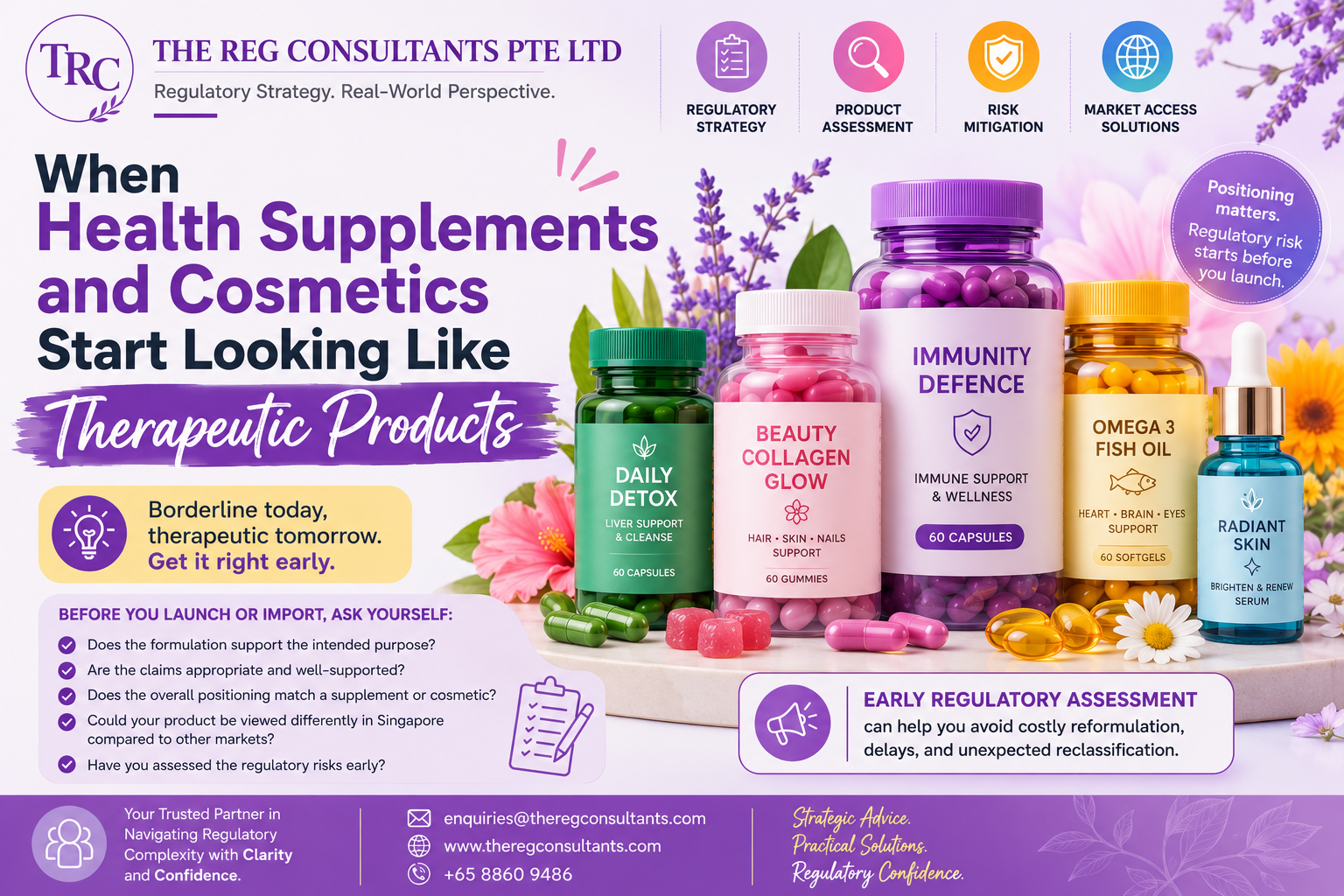
With increasing challenges surrounding drug development, long clinical timelines and rising regulatory barriers, many pharmaceutical companies and emerging e-commerce brands are beginning to expand into health supplements and cosmetics.
At the same time, consumers are becoming increasingly focused on preventive health, wellness and functional products that support daily wellbeing. We started seeing this trend years ago with the rise of “superfoods” and wellness-focused ingredients, but the market today has become much more competitive.
As competition increases, many companies are now trying to formulate and position their products to look increasingly “drug-like” in order to stand out in the market.
This is where regulatory concerns may start to arise.
Understanding the Intended Product Category
One of the first steps during product development is understanding what type of product you are actually trying to create.
Simply:
Health Supplements
Health supplements are products made from vitamins, minerals, amino acids, traditional ingredients or botanical extracts intended to supplement the diet and support healthy body functions.
Cosmetics
Cosmetics are products intended primarily for cleansing, beautifying, perfuming, protecting or improving the appearance of the skin, hair or body.
While these definitions may appear straightforward, the actual regulatory concerns often arise from how the product is formulated, positioned and marketed.
The Three Core Areas: Formulation, Label and Claims
In many situations, the regulatory risk of a product does not come from a single ingredient alone, but from the overall presentation of the product.
1.Formulation
When designing a formulation, companies should understand how the individual ingredients work physiologically and whether the combined blend supports the intended purpose of the product.
We increasingly observe companies combining:
into highly complex blends designed to appear more “efficacious”.
In some situations, the overall formulation may begin moving closer towards a borderline or therapeutic positioning.
Novel dosage forms and delivery systems such as liposomal technologies may also require additional consideration depending on the product positioning and intended claims.
2.Product Label and Positioning
The product label should align with the intended product category and consumer understanding of the product.
Areas that should be considered include:
In some situations, even where the formulation itself appears acceptable, the overall presentation and marketing direction may begin creating a therapeutic impression.
3. Claims
One of the most common issues observed during product review is the use of claims that extend beyond the intended product category.
Examples may include:
In many situations, companies assume that adding more marketing claims makes the product appear stronger commercially. However, excessive or unsupported claims may instead increase regulatory concerns.
A more sustainable approach is to focus on a smaller number of well-supported claims supported by recognised references, published literature or established ingredient data.
Common Misconceptions We Commonly Observe
One of the more common misconceptions is assuming that a product accepted in another country will automatically be acceptable under Singapore’s regulatory framework.
This may not always be the case.
For example, certain novel wellness ingredients or emerging product categories marketed overseas — such as SARMs-containing supplements, novel mushroom extracts positioned for cognitive enhancement, testosterone-boosting supplements, CBD-type wellness products, or peptide-based beauty supplements — may require closer regulatory consideration in Singapore depending on:
Similarly, some products may technically avoid directly mentioning diseases on the label, while the overall advertising and marketing materials strongly imply therapeutic intent.
Examples may include:
This is where companies may unintentionally move their product into a borderline category and trigger additional regulatory scrutiny or classification concerns.
Key Questions to Consider Before Market Entry
Before importing or launching a product, companies should consider:
Early assessment of these areas can help reduce unnecessary reformulation work, marketing revisions and regulatory delays later in the process.
Why Early Regulatory Positioning Matters
In many situations, companies only begin considering regulatory requirements after the product formulation, branding and marketing concepts have already been finalized.
However, by that stage, significant changes may already be required if the product positioning begins leaning too closely towards therapeutic territory.
This is particularly common in products developed around:
In practice, regulatory assessment should not only focus on whether an ingredient is “allowed” individually, but also whether the overall product presentation, formulation rationale and intended claims remain consistent with the intended product category.
This is one of the reasons why early regulatory strategy discussions are important before large-scale manufacturing, packaging finalisation or marketing rollout begins.
How TRC Can Support
TRC supports companies with early-stage regulatory assessment for health supplements, cosmetics and borderline products intended for the Singapore market.
Support may include:
In many situations, an early regulatory review is often sufficient to identify potential issues before significant time and resources are invested into product launch activities.
If your company is currently evaluating a new supplement, cosmetic or functional wellness product for the Singapore market, feel free to contact TRC for an initial discussion.

If you have any specific regulatory questions pertaining to entering the Singapore market or require assistance with pharma regulatory services and medical product registration, feel free to reach out. Your success in the pharmaceutical industry starts with us!